
Nuestras piedras
- Aquamarine
- Amethyst
- Green Amethyst
- Amazonite
- Apatite
- Aventurine
- Azurite
- Chalcedony
- Yellow Calcite
- Celestite
- Kyanite
- Citrine
- Chrysocolla
- Chrysoprase
- Cristal Quartz
- Smoky Quartz
- Pink Quartz
- Rutilated Quartz
- Green Quartz
- Diamond
- Black Diamond
- Sphalerite
- Emerald
- Spinel
- Granate
- Iolite
- Jade
- Labradorite
- Lapis Lazuli
- Malachite
- White Marble
- Moissanite
- Moonstone
- Morganite
- Obsidian
- Black Onyx
- Opaline
- Andean Opal
- Pink Opal
- Peridot
- Pyrite
- Rhodolite
- Rubellite
- Ruby
- Serpentine
- Silica
- Tanzanite
- Topaz
- Yellow Topaz
- Tsavorite
- Blue Tourmaline
- Pink Tourmaline
- Black Tourmaline
- Green Tourmaline
- Sapphire
- Pink Sapphire
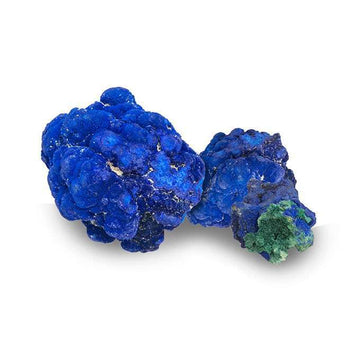
Azurite
Its name comes from the Arabic word azur, which means blue. The Greeks called it kuanos, and it is from this name that the word cyan, one of the shades of blue used in painting, derives.
It is a sacred stone for the indigenous peoples of North America and the Mayans, as they used it to contact spiritual guides. In Egypt, it was a symbol of social and spiritual status.
Azurite is a stone of transformation that helps to discover new ways of learning, strengthening self-expression, reducing stress, and eliminating fears.